TMJ disorders are one of the most common types of orofacial pain. They affect millions of Americans each year, and women are about twice as likely to develop them as men. Despite how common they are, TMJ disorders are often misdiagnosed or overlooked because the symptoms can look like other problems.
How Your TMJ Works
TMJ disorders can develop for many reasons. Sometimes several factors work together:
- Teeth grinding or clenching (bruxism), especially during sleep
- An injury to the jaw from an accident, fall, or sports impact
- Arthritis in the jaw joint
- The disc inside the joint slipping out of place
- Stress, which causes many people to clench their jaw without knowing it
- Bite problems (teeth not lining up correctly)
- Connective tissue disorders like Ehlers-Danlos Syndrome
Symptoms to Watch For
TMJ disorders can cause a wide range of symptoms. Some people have only one or two, while others deal with many at the same time:
- Pain or tenderness in the jaw, especially near the ear
- Clicking, popping, or grinding sounds when you open or close your mouth
- Your jaw locking open or closed
- Pain when chewing, biting, or yawning
- Headaches, especially in the temples
- Ear pain, ringing, or fullness without an ear infection
- Neck and shoulder stiffness
- Teeth that feel sensitive when your dentist says they are fine
Patients spend an average of 4.2 years seeing 5.3 different doctors before finding the right specialist for their TMJ condition.
Why TMJ Disorders Are Often Misdiagnosed
One of the biggest challenges with TMJ disorders is that the symptoms overlap with many other conditions. Jaw-related headaches can be mistaken for migraines. Ear pain from TMJ can be confused with an ear infection. Tooth sensitivity from jaw clenching can lead to unnecessary dental work like root canals or extractions.
The American Academy of Orofacial Pain reports that patients spend an average of 4.2 years seeing 5.3 different doctors before finding the right specialist for their TMJ condition. This delay often happens because general practitioners and dentists do not always have the specialized training needed to diagnose TMJ disorders accurately.
When to See a Specialist
You should see an orofacial pain specialist if:
- Your jaw pain or headaches have lasted more than a few weeks
- Your jaw clicks, pops, or locks regularly
- Previous treatments have not provided lasting relief
- You grind your teeth and wake up with jaw soreness
- You have ear pain but your ears are healthy
- Your symptoms are getting worse over time
An orofacial pain specialist has advanced training beyond dental school that focuses specifically on diagnosing and treating conditions of the jaw, face, head, and neck. Board-certified orofacial pain specialists are rare, with fewer than 500 worldwide.
What Happens at a TMJ Evaluation
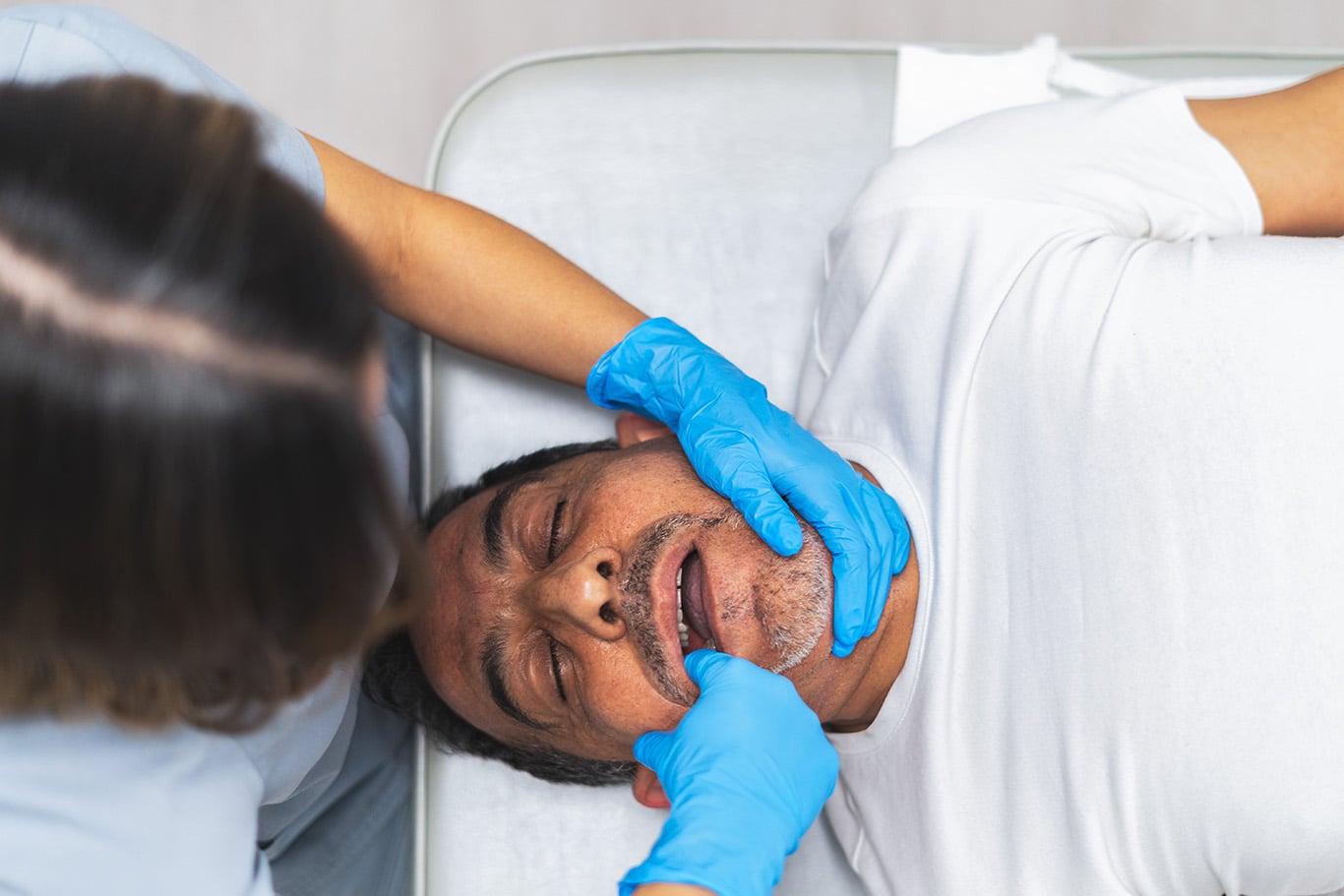
At South Bay TMJ, Sleep, Headache & Orofacial Pain Institute, your first visit lasts 60 to 90 minutes. Your doctor reviews your full medical history, listens to your symptoms, and performs a hands-on exam of your jaw, face, head, and neck. You may also need imaging like CT scans or MRI to see the joint and surrounding structures in detail.
In about 90% of cases, a thorough history and clinical exam provide enough information for an accurate diagnosis. Once the cause is identified, your doctor creates a personalized treatment plan using conservative, non-surgical methods.
Frequently asked questions.
Straightforward answers to the questions patients ask most about TMJ disorders and when to seek specialist care.
TMJ disorders range from mild to severe. While some cases resolve with self-care, others can worsen over time and lead to joint damage, chronic pain, and reduced quality of life. Early evaluation by a specialist can prevent the condition from getting worse.
Some mild TMJ symptoms may improve with rest and self-care. However, many TMJ disorders are ongoing conditions that benefit from professional treatment. If symptoms last more than a few weeks, see an orofacial pain specialist for a proper evaluation.
An orofacial pain specialist is the most qualified provider for TMJ disorders. These are doctors who have completed advanced training beyond dental or medical school specifically focused on pain conditions of the jaw, face, and head. Look for a Diplomate of the American Board of Orofacial Pain.