

― Regenerative Treatment

PRP Therapy for TMJ Pain.

Board-Certified Specialists · Torrance, California · 32+ Years of Experience

PRP uses healing factors from your own blood to repair damaged tissue in the jaw joint. It is a non-surgical option for chronic TMJ pain, inflammation, and disc problems.
South Bay TMJ
Specialty Orofacial Pain Care
PRP therapy TMJ Headaches page showing a woman holding her temples with migraine pain

Healing that comes from your own blood.

PRP (platelet-rich plasma) therapy is a regenerative treatment that uses healing factors from your own blood to repair damaged tissue in the TMJ. It is a safe, non-surgical option for patients with chronic TMJ pain, joint inflammation, and disc problems. Research supports PRP for long-term TMJ pain relief.

At South Bay TMJ, Sleep, Headache & Orofacial Pain Institute, Dr. Paul Grin offers PRP therapy for TMJ disorders. Through his work at UCLA, he has seen the benefits of PRP for patients who have not responded to other treatments.
If oral appliances, physical therapy, or medications have not given you lasting relief, a regenerative approach may be worth discussing. Meet Dr. Eric Grin →
― How It Works

What PRP therapy actually does.

Your blood contains three main components: red cells, white cells, and platelets. Platelets are best known for helping blood clot, but they also contain proteins called growth factors that play a key role in healing injured tissue.

PRP therapy concentrates these platelets. Your doctor draws a small amount of your blood and places it in a centrifuge, a device that spins the blood at high speed. This separates the platelets from the other components and creates a concentrated solution with three to five times more platelets than normal blood.

This platelet-rich solution is then injected directly into the TMJ. Once in the joint, the concentrated growth factors go to work:
01

Reduce inflammation in the joint.

02

Attract repair cells to the damaged area.

03

Promote new, healthy tissue to grow.

04

Support blood vessel formation to improve circulation to the joint.

Because PRP uses your own blood, the risk of allergic reaction or rejection is extremely low. That makes it one of the safest regenerative treatments available.
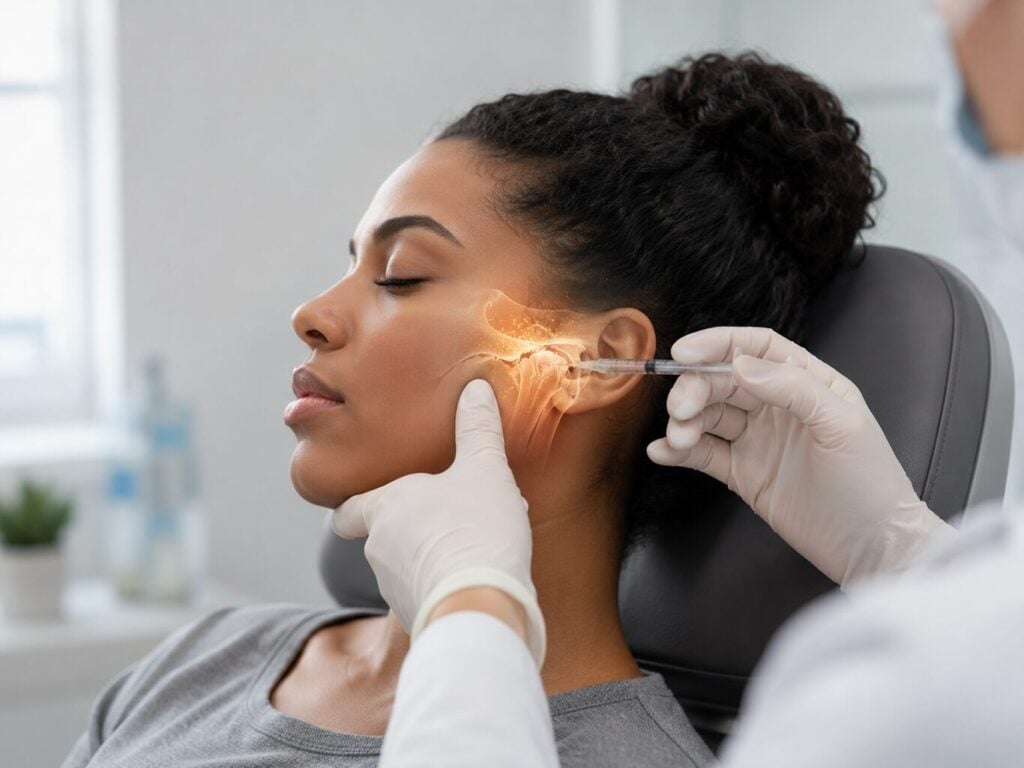
A woman sits with eyes closed as a medical professional injects her jaw area, with a digital illustration highlighting jaw muscles.
―What It Treats

Who PRP can help.

PRP therapy for the TMJ can help patients dealing with:
01

Joint Wear and Disc Problems

TMJ osteoarthritis (wear-and-tear damage in the jaw joint) and TMJ disc displacement, where the disc inside the joint has slipped out of position.
02

Stubborn Inflammation and Injury

Chronic TMJ inflammation that has not responded to medications or other treatments, and TMJ pain following injury or trauma to the jaw.

03

Connective Tissue and Persistent Pain

Joint damage related to Ehlers-Danlos Syndrome or other connective tissue disorders, and persistent jaw pain after previous TMJ treatments have not provided lasting relief.
― The Visit

What to expect, step by step.

The whole procedure takes about 30 to 45 minutes. Most patients return to their normal routine the same day.

01

Blood Draw

A small amount of blood, about the same as a routine blood test, is drawn from your arm.
02

Processing

The blood spins in a centrifuge for about 10 to 15 minutes. This separates and concentrates the platelets.
03

Injection

The concentrated PRP is carefully injected into and around the TMJ, placed precisely where it is needed.
04

Recovery

Most patients go back to their day right away. Mild soreness at the injection site can last a day or two.

Most patients receive a series of one to three PRP treatments spaced several weeks apart. Your doctor recommends the number of sessions based on your condition and how you respond.

― The Evidence

What the research shows.

PRP therapy for TMJ disorders has been studied in clinical trials and systematic reviews. The evidence supports its use, especially for longer-term pain relief.

01
Pain reduction
Reviews of randomized trials have found that PRP can reduce TMJ pain more than some other injection treatments. At six months, PRP-treated patients reported better pain relief than those treated with corticosteroids, hyaluronic acid, or saline.
02
Improved jaw mobility
Studies show PRP can improve how wide patients can open their mouths, with reported gains in the range of roughly 2.5 mm to 10 mm.
03
Natural inflammation control
PRP contains growth factors such as PDGF and TGF-beta that help regulate inflammation, offering an alternative to synthetic steroids, which can weaken tissue with repeated use.
04
Benefits that build over time
Unlike corticosteroid injections, which tend to fade, PRP promotes tissue repair, so the benefit tends to build as the joint heals.
PRP shows strong results in studies, but outcomes vary by patient. The severity of joint damage, overall health, and age can all affect results. Your doctor will discuss realistic expectations for your situation.
― Safety

Risks and side effects.

PRP therapy is considered very safe because it uses your own blood. The most common side effects are:
― Candidacy

Are you a candidate?

PRP therapy may be a good option if you:
Serious complications are rare
There is no risk of allergic reaction, because the treatment uses your own biological material. Infection risk is very low when the procedure is performed under sterile conditions by a trained specialist.
PRP may not be suitable for patients with certain blood disorders, active infections, or those taking blood-thinning medications. Your doctor will review your medical history to determine if PRP is right for you.
― Better Together

PRP works well muscle other treatments.

For some patients, PRP is part of a larger plan. It can be combined with:

Prolotherapy

Together, PRP and prolotherapy can provide both healing growth factors and connective tissue strengthening for patients with joint instability.

Exosome Therapy

In some cases, PRP can be combined with exosomes for a stronger regenerative effect.

Oral Appliance Therapy

Using an appliance to protect the joint while PRP promotes healing can help maximize results.
― FAQ

Common questions about PRP for TMJ.

Practical answers from our board-certified specialists. These questions come directly from patients we see at the clinic.

Is PRP therapy for TMJ painful?

Most patients report only mild discomfort during PRP therapy. The blood draw feels like a routine blood test. The injection into the TMJ may cause brief pressure or mild pain. Some patients experience soreness in the jaw area for a day or two afterward. Your doctor will take steps to keep you comfortable during the procedure.

How many PRP treatments will I need?

Most patients receive one to three PRP treatments spaced several weeks apart. The number of sessions depends on the severity of your condition and how your body responds to the first treatment. Your doctor will recommend a plan based on your individual needs.

How soon will I feel results from PRP?

PRP works by stimulating your body's natural healing process, so results are gradual. Some patients notice improvement within a few weeks. Most experience the full benefit over two to three months as the tissue repairs itself. Unlike quick-acting medications, PRP aims for lasting improvement rather than temporary relief.

Is PRP therapy covered by insurance?

Insurance coverage for PRP therapy varies by plan. Some insurance companies cover PRP as part of TMJ treatment, while others consider it an elective procedure. Our team will check your benefits and discuss costs before treatment begins so there are no surprises.

Is PRP safe?

PRP therapy is considered very safe. Because it uses your own blood, there is no risk of allergic reaction or rejection. The most common side effects are mild soreness and temporary swelling at the injection site. Serious complications are extremely rare when performed by a trained specialist.
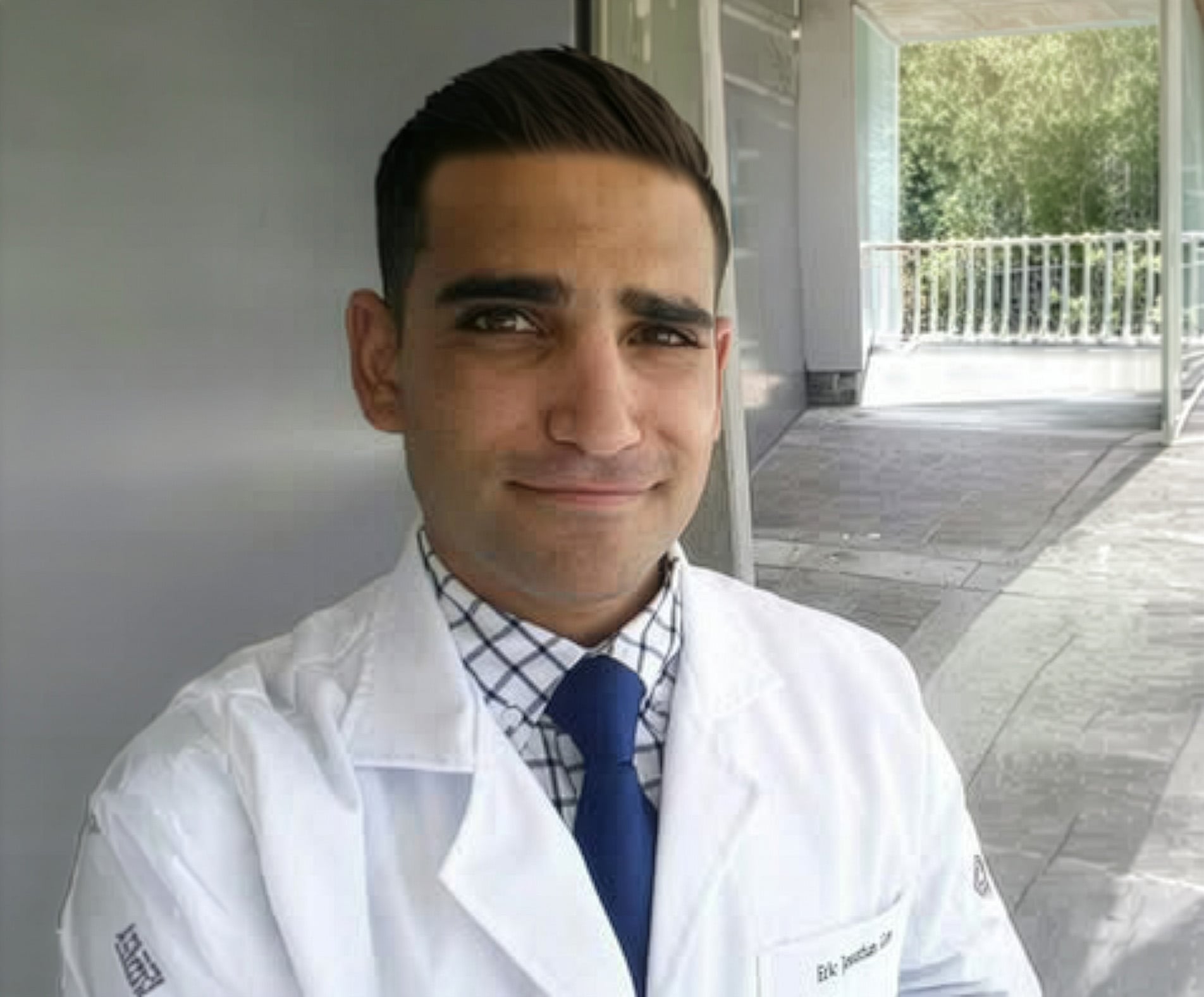
Dr. Eric Grin
Medically Reviewed By

Board-Certified Orofacial Pain Specialist · Diplomate, American Board of Orofacial Pain · Assistant Professor, UCLA

Last Updated: April 24, 2026
― Schedule Your Consultation

Ready to Find Relief?

Schedule your evaluation with our board-certified orofacial pain specialists and start your path to lasting recovery.

We accept Medicare and most major insurance plans.