
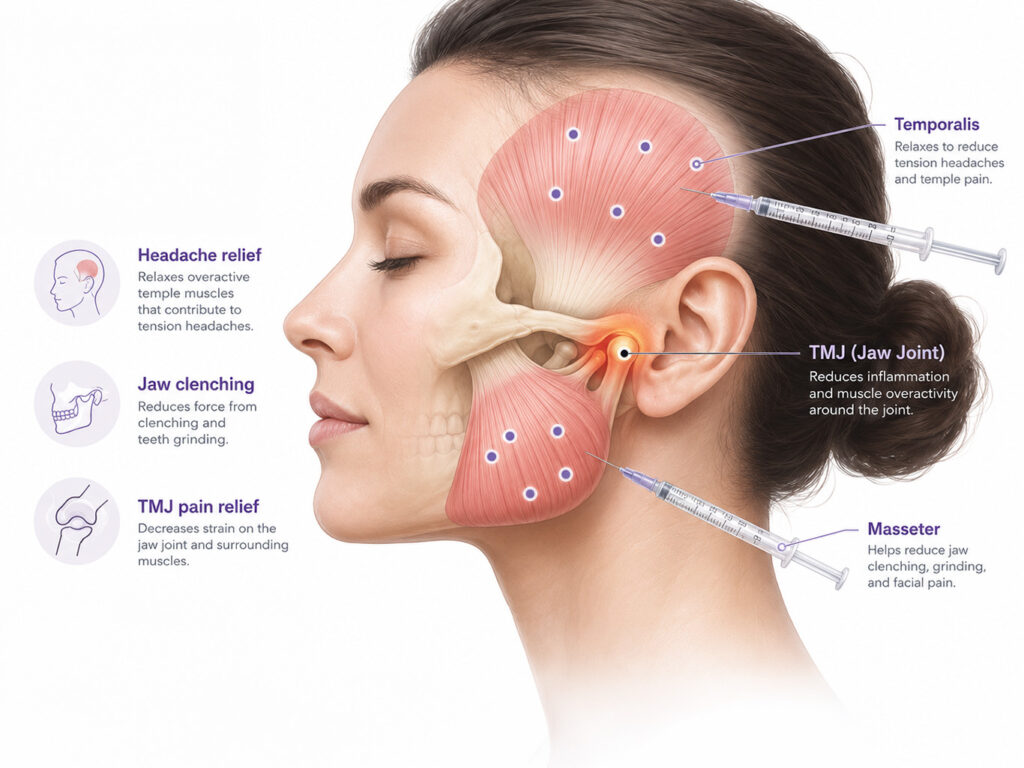

Botox relaxes overactive jaw muscles, which lowers the force behind clenching and grinding. That relieves pain and protects the joint. The injections take just a few minutes in-office, and results typically last three to four months.
If you wake up with jaw soreness or headaches, your jaw muscles may be working overtime all night. Easing that overactivity is exactly what therapeutic Botox is for. Meet Dr. Eric Grin →
Masseter. The large chewing muscle in your cheek, the one you feel tighten when you clench.
Temporalis. The muscle near your temple. Tension here is a common cause of temple headaches.
Other jaw muscles. Depending on your pain pattern, other muscles may be treated.
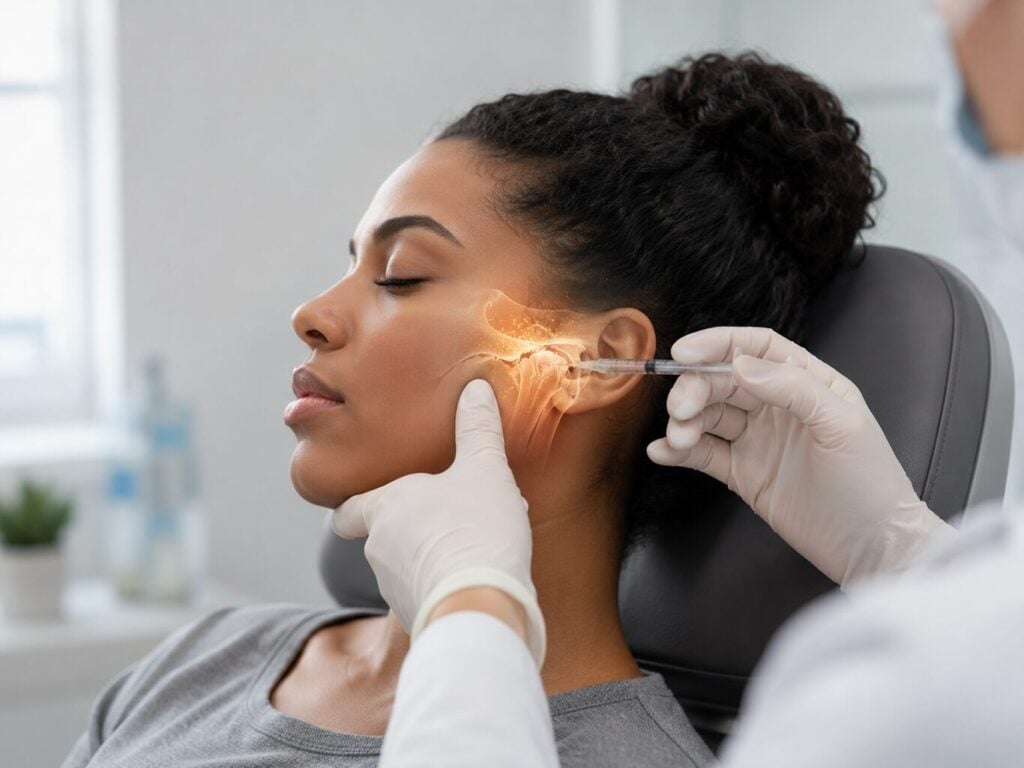
Targeting. Your doctor identifies the specific muscles causing your pain.
Injection. Small amounts of Botox are injected into those muscles with a very fine needle. Most patients describe it as a brief pinch or mild sting, and no anesthesia is usually needed.
Back to your day. You can return to normal activities right after the appointment.
Results build. Muscles relax over three to seven days, with the full effect by about two weeks. Relief lasts roughly three to four months; then treatment can be repeated.
Botox works well alongside other treatments like oral appliances and physical therapy, and it does not require surgery or general anesthesia.
Botox may be a good option if you:
Botox for TMJ is generally very safe when performed by a trained specialist. Possible side effects include:
Practical answers from our board-certified specialists. These questions come directly from patients we see at the clinic.
When used for TMJ treatment, Botox is injected into the jaw muscles, not the facial expression muscles used in cosmetic treatments. Some patients notice a slight slimming of the jawline over time because the masseter muscle becomes less bulky. This is generally considered a positive side effect, not a concern.
Botox for TMJ typically lasts three to four months. Many patients schedule repeat treatments three to four times per year. Over time, some patients find they need treatments less frequently as the muscles become trained to relax.
Yes. Botox reduces the excessive force of your jaw muscles but does not eliminate normal function. You can still chew, talk, and smile normally. Some patients notice that very hard or chewy foods require a little more effort for the first few weeks.
Some medical insurance plans cover Botox when it is prescribed for a medical condition like TMJ disorders or chronic migraines. Coverage varies by plan. Our team will verify your benefits and discuss costs before treatment.
Yes, and this is a common combination. Botox relaxes the overactive muscles during the day and night, while a custom oral appliance protects your teeth and supports jaw alignment during sleep. Together, they address both the muscular and structural aspects of TMJ disorders.
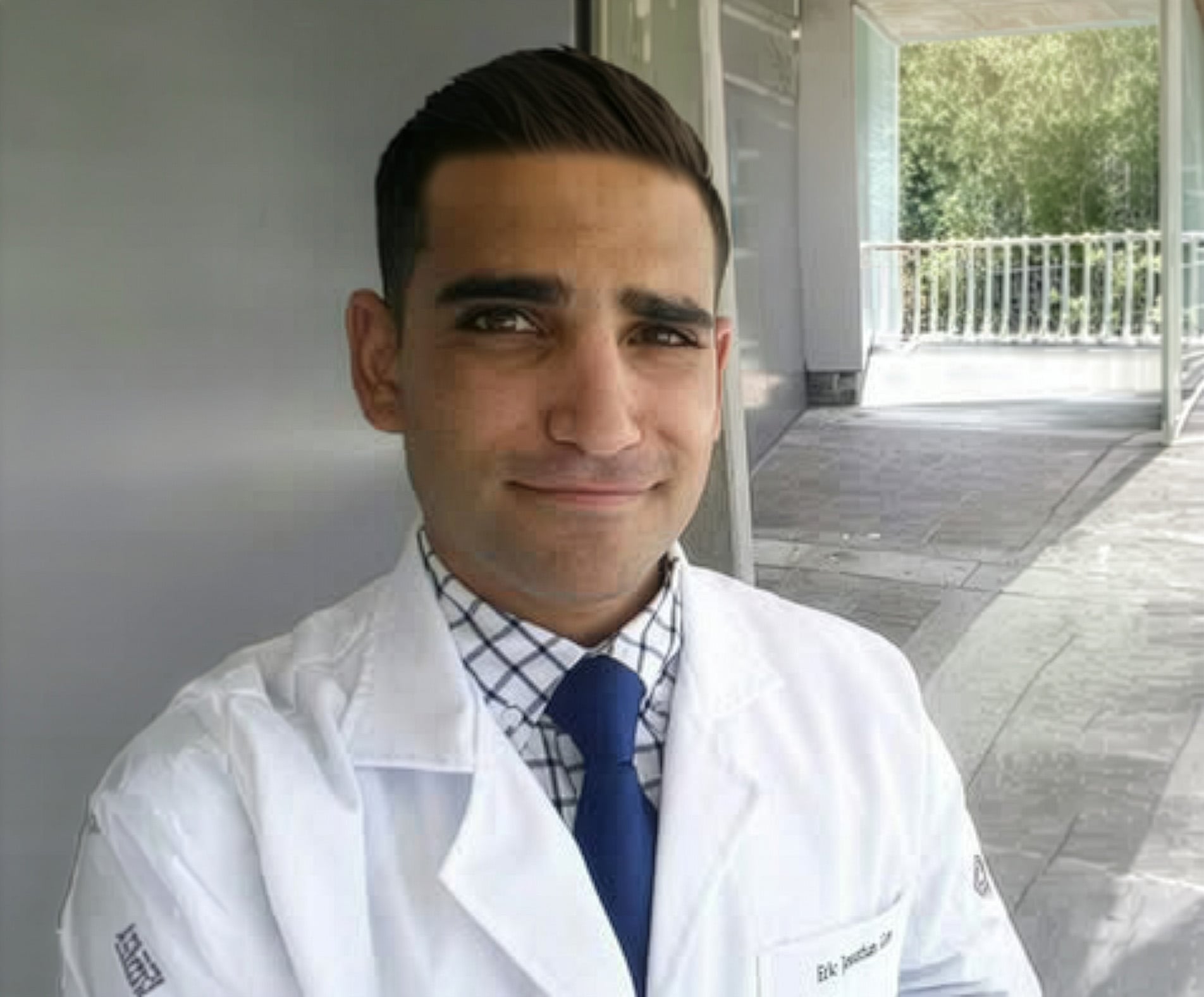
Board-Certified Orofacial Pain Specialist · Diplomate, American Board of Orofacial Pain · Assistant Professor, UCLA
Schedule your evaluation with our board-certified orofacial pain specialists and start your path to lasting recovery.
We accept Medicare and most major insurance plans.