
TMJ disorders (TMD) are conditions affecting the temporomandibular joints and jaw muscles. They cause jaw pain, clicking, trouble opening the mouth, and headaches — and are among the most common types of orofacial pain. Severity ranges from mild discomfort to chronic, debilitating pain.

Experiencing jaw pain, clicking, or headaches? Our specialists can help.
Your temporomandibular joints (TMJ) are the two joints on each side of your head, just in front of your ears. They work like hinges that let your lower jaw move up, down, and side to side. A small disc made of cartilage sits between the bones in each joint. This disc cushions the joint and helps it move smoothly.
TMJ disorders happen when something goes wrong with the joints, the disc, or the muscles that control jaw movement. The problem can be in one joint or both. Doctors divide TMJ disorders into two main categories based on where the problem starts.
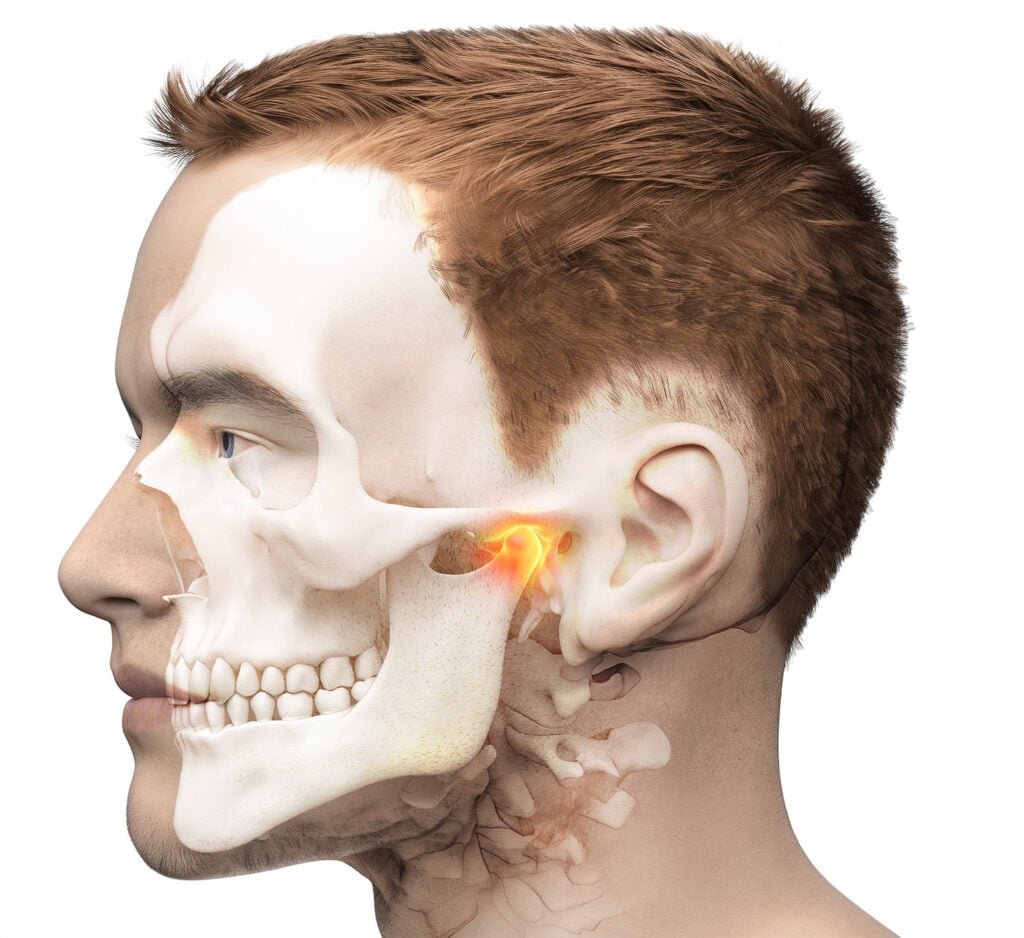
The Diagnostic Criteria for TMD (DC/TMD) divide jaw disorders into two main groups based on whether the pain comes from the muscles or from inside the joint itself. Many patients have a combination of both.
01 · Muscle-related
Pain comes from the muscles that move the jaw
Myogenous TMD means the pain comes from the muscles that move your jaw. These muscles can become tight, sore, or develop painful trigger points. Common causes include teeth grinding, clenching, stress, and poor posture.
How it usually feels: Dull, aching pain in the cheeks, temples, or jaw muscles. Often worse in the morning if you grind at night. Generally responds well to conservative treatment.
02 · Joint-related
Pain comes from inside the jaw joint itself
Many patients have a mix of both types. This is one reason why seeing a specialist who understands the full range of TMJ disorders is so important for getting the right diagnosis.
The Diagnostic Criteria for TMD (DC/TMD) divide jaw disorders into two main groups based on whether the pain comes from the muscles or from inside the joint itself. Many patients have a combination of both.
Pain when you chew, bite, or yawn
TMJ disorders can develop for many reasons. In some cases, several factors work together to create the problem. Understanding the cause is essential to choosing the right treatment.

Bruxism, especially during sleep, puts repeated strain on the jaw muscles and joints. Learn more about bruxism →
Ehlers-Danlos Syndrome and similar conditions make joints more flexible and prone to injury or dislocation.
Forward head posture from desk work or phone use, along with extended dental procedures, can also contribute.
Diagnosing TMJ disorders starts with a thorough evaluation. At our practice, your first appointment lasts 45 to 60 minutes because accurate diagnosis is the most important step toward the right treatment plan. We never double-book.
Your doctor will review your complete medical history, ask detailed questions about your symptoms, and perform a hands-on exam of your jaw, face, head, and neck. The exam includes checking how your jaw moves, listening for clicking or popping, testing the muscles for tenderness, and evaluating your bite.
You may also need imaging or specialized tests to get a complete picture of what is happening:
In about 90% of TMJ cases, a detailed history and clinical exam provide enough information for an accurate diagnosis. Our specialists follow the Diagnostic Criteria for TMD (DC/TMD), the international standard used by orofacial pain experts worldwide.
Treatment depends on the type and severity of your condition. Our practice always starts with the most conservative approach and avoids irreversible procedures whenever possible. Most patients respond well to non-surgical care.
First-line, reversible options
For complex or chronic cases
One of the most common drivers of TMJ pain is nighttime clenching.
Many chronic headaches trace back to jaw muscle tension and TMJ dysfunction.
TMJ stands for temporomandibular joint, which is the jaw joint itself. TMD stands for temporomandibular disorder, the medical term for problems with the jaw joint or the muscles that control it. Most people use "TMJ" to describe their condition, but "TMD" is the more accurate term for the disorder.
Yes. TMJ disorders are a common cause of ear pain, stuffiness, and ringing in the ears (tinnitus). The TMJ sits very close to the ear canal, so inflammation in the joint or surrounding muscles can feel like the pain is coming from inside the ear. An ear exam may show nothing because the real source is the jaw.
Some TMJ disorders can get worse without treatment. Ongoing teeth grinding can wear down the disc inside the joint, and untreated disc displacement can lead to joint damage over time. If symptoms have lasted more than a few weeks or are getting worse, seeing an orofacial pain specialist sooner can help prevent further damage.
TMJ disorders are not always permanent. Many patients find significant relief with the right treatment plan. Some chronic cases may need ongoing management, but the goal of treatment is to reduce pain, restore jaw function, and improve quality of life. Early treatment generally leads to better outcomes.
Stress is a major contributing factor in TMJ disorders. When stressed, many people clench their jaw or grind their teeth without realizing it, especially during sleep. This constant tension strains the jaw muscles and joints over time. Stress management combined with a custom oral appliance worn at night can help protect the TMJ.
Coverage varies by plan. Our practice accepts Medicare and most major insurance plans. Some TMJ treatments are covered as medical benefits rather than dental benefits, which can affect reimbursement. Our team can verify your specific coverage before your first visit so you know what to expect.

Board-Certified Orofacial Pain Specialist · Diplomate, American Board of Orofacial Pain · Assistant Professor, UCLA
We accept Medicare and most major insurance plans.