― In-Office Treatment

Trigger Point Injections for Jaw and Facial Pain.

Board-Certified Specialists · Torrance, California · 32+ Years of Experience

A trigger point is a tight, painful knot in a muscle. Injecting it directly releases the tension and often brings fast relief. We use ultrasound guidance to place each injection exactly where it is needed.
Ultrasound-Guided Care
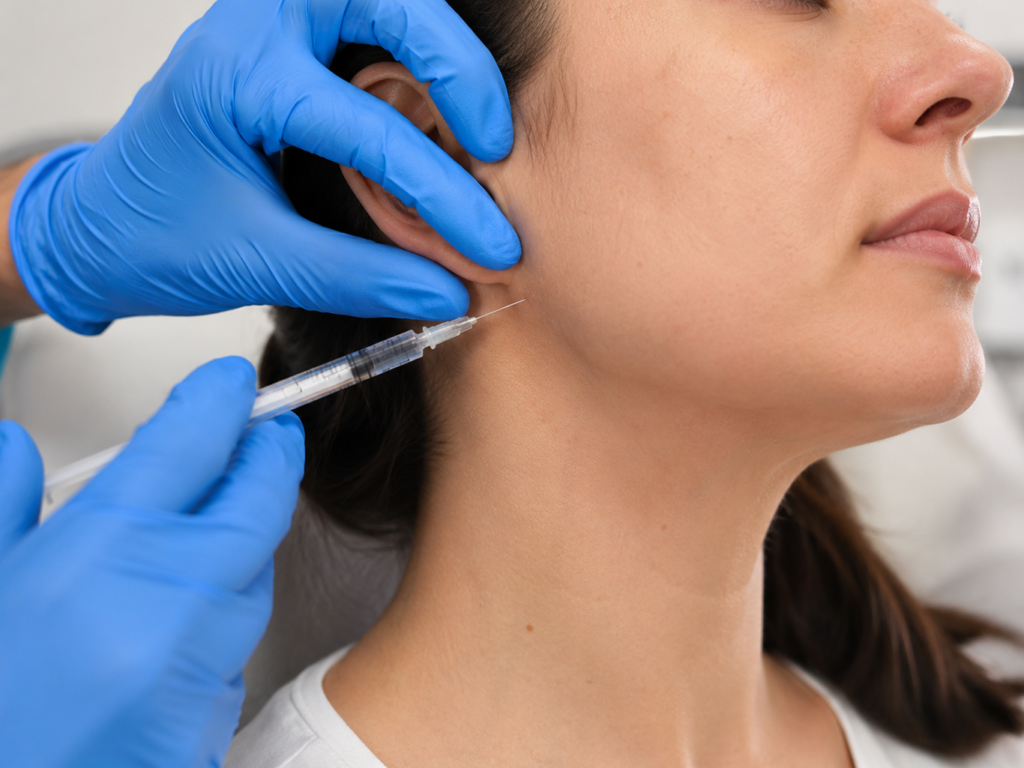
A person receives an injection in the jaw area from someone wearing blue medical gloves.

Release the knot, calm the pain.

Trigger point injections are a targeted treatment for myofascial pain in the face and jaw. A trigger point is a tight, painful knot within a muscle. Injecting medication directly into the trigger point releases the tension and provides fast pain relief. Our specialists use ultrasound guidance to place each injection precisely where it is needed.

At South Bay TMJ, Sleep, Headache & Orofacial Pain Institute, trigger point injections are a key part of our approach to treating myofascial pain, TMJ disorders, and related headaches.

If a “toothache” has no dental cause, or your temple headaches keep coming back, a muscle trigger point may be the source. Releasing it can settle pain that medications have not touched. Meet Dr. Eric Grin →
― The Basics

What trigger points actually are.

A trigger point is a small, tight area within a muscle that is irritated and painful. You can often feel it as a firm knot or band in the muscle. When you press on it, it hurts. But trigger points also cause referred pain, which means the pain travels somewhere else. A trigger point in your jaw muscle can send pain to your temple, ear, or teeth.

In the face and jaw, trigger points commonly develop in:
01

Masseter. The main chewing muscle in your cheek. Trigger points here can cause jaw pain, tooth pain, and headaches.

02

Temporalis. The muscle near your temple. Trigger points here often cause temple headaches

03

Pterygoids. Deep jaw muscles. Trigger points here can cause pain behind the eye, ear pain, and trouble opening the mouth.

04

Neck and shoulder. Trigger points in the upper trapezius and sternocleidomastoid can refer pain to the head, face, and jaw.

A woman with a pained expression touches her cheek, appearing to experience discomfort or pain in her jaw or mouth.
― What It Treats

What trigger point injections can treat.

― The Procedure

How the injection works.

Your doctor inserts a thin needle directly into the trigger point. The injection may contain a local anesthetic, an anti-inflammatory medication, or in some cases saline alone. The needle itself helps break up the tight knot, and the medication adds pain relief and reduces inflammation. We use ultrasound guidance so your doctor can see the muscle in real time and reach the exact spot, which makes treatment more effective and more comfortable than unguided injections.
01

About 15 to 30 minutes, depending on how many trigger points are treated.

02

Ultrasound locates each point before any injection is placed.

03

A brief twitch is a good sign. You may feel a momentary cramp as the needle reaches the trigger point, which means it has found the target.

04

Relief is often fast, sometimes within minutes, and you can return to normal activities right away. Mild soreness for a day or two is normal.

Depending on your condition, you may need a single session or a short series spaced a few weeks apart. Your doctor recommends a plan based on the number and severity of your trigger points.

― Safety

Risks and side effects.

Trigger point injections are safe and well-tolerated. The most common side effects are:

Serious complications are very rare
This is especially true when injections are performed with ultrasound guidance by a trained specialist.
― FAQ

Common questions about trigger point injections.

Practical answers from our board-certified specialists. These questions come directly from patients we see at the clinic.

Are trigger point injections painful?

Most patients describe the injection as a brief pinch or pressure. You may feel a momentary cramp or twitch in the muscle when the needle reaches the trigger point. This sensation is normal and brief. Many patients say the discomfort is much less than the chronic pain they have been living with.

How quickly do trigger point injections work?

Many patients feel relief within minutes of the injection. The full effect is usually felt within a few days. How long the relief lasts depends on the underlying cause of the trigger points. When combined with other treatments like physical therapy and oral appliances, the results tend to last longer.

How many trigger point injections will I need?

Some patients find relief after a single session. Others benefit from a series of treatments over several weeks, especially if they have multiple trigger points or chronic myofascial pain. Your doctor will create a treatment plan based on your specific situation.

Can trigger point injections help with headaches?

Yes. Trigger points in the jaw and temple muscles are a common cause of tension headaches. By releasing these trigger points, the muscle tension that drives the headaches is eliminated. Many patients who thought they had migraines or tension headaches discover that myofascial trigger points were the real source of their pain.

Dr. Eric Grin
Medically Reviewed By

Board-Certified Orofacial Pain Specialist · Diplomate, American Board of Orofacial Pain · Assistant Professor, UCLA

Last Updated: April 24, 2026
― Schedule Your Consultation

Ready to Find Relief?

Schedule your evaluation with our board-certified orofacial pain specialists and start your path to lasting recovery.

We accept Medicare and most major insurance plans.