― Regenerative Treatment

Prolotherapy for TMJ pain and jaw instability.

Board-Certified Specialists · Torrance, California · 32+ Years of Experience

Prolotherapy strengthens the weakened ligaments around the jaw joint by triggering your body’s own healing response. It is a non-surgical option for jaw instability, recurrent dislocations, and chronic TMJ pain.
South Bay TMJ
Specialty Orofacial Pain Care

Prolotherapy TMJ disorders page showing a woman holding her cheek with jaw pain

Stronger ligaments, a more stable jaw.

Prolotherapy is a regenerative injection treatment that strengthens weakened ligaments around the TMJ. It works by triggering your body’s natural healing response to produce stronger connective tissue. Prolotherapy is especially helpful for patients with jaw instability, recurrent jaw dislocations, and chronic TMJ pain that has not responded to other treatments.

At South Bay TMJ, Sleep, Headache & Orofacial Pain Institute, prolotherapy is an important part of many treatment plans. Our specialists use this gentle, non-surgical approach to help patients heal naturally without the risks of surgery.
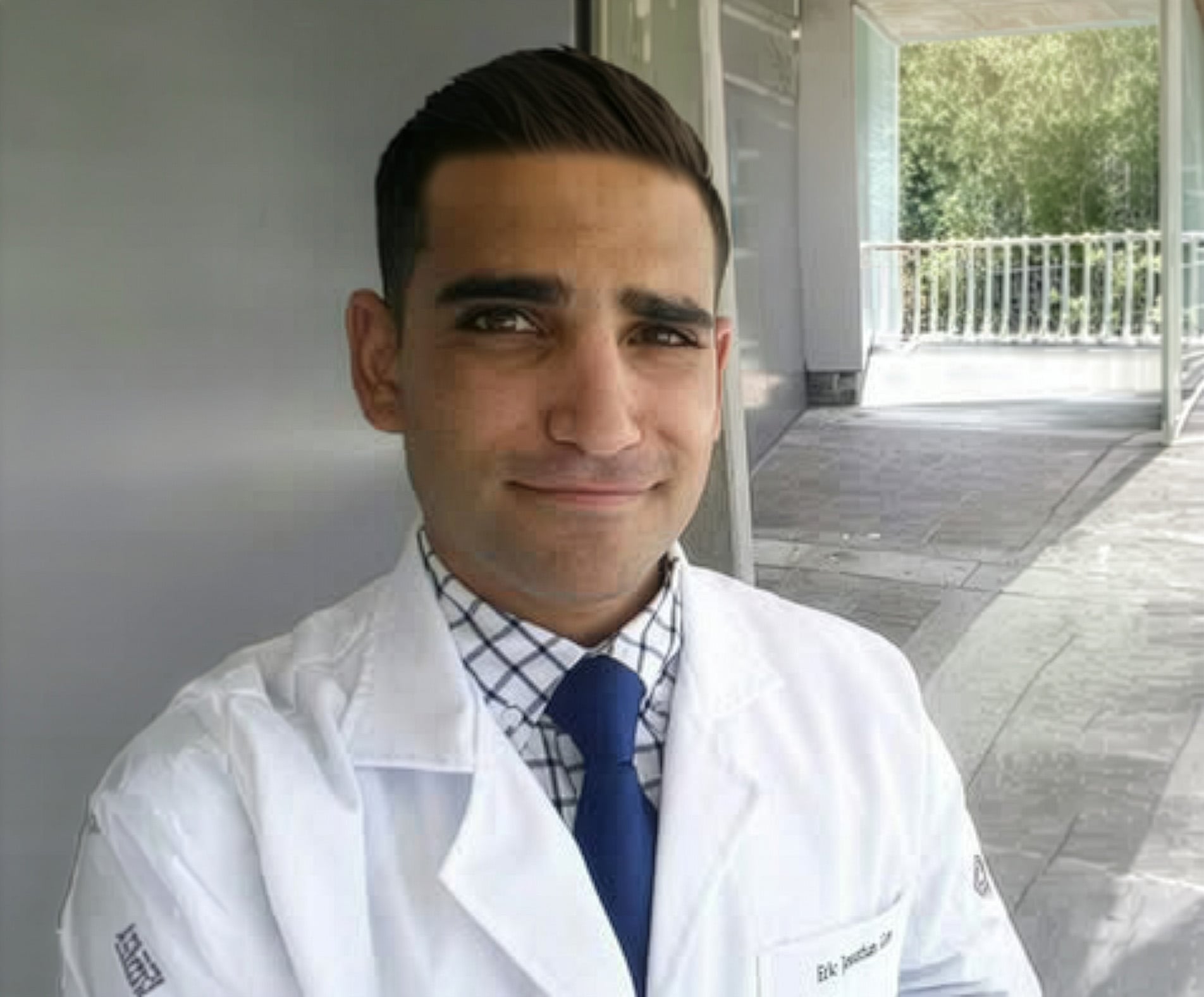
If your jaw clicks, shifts, or slips out of place, the problem may be loose ligaments, not the joint itself. Strengthening that connective tissue is what prolotherapy is built to do. Meet Dr. Eric Grin →
― How It Works

What prolotherapy actually is.

Prolotherapy (short for “proliferative therapy”) is a regenerative injection technique that has been used for decades to treat weakened ligaments and connective tissue. The procedure injects a healing solution, most often a dextrose (sugar water) solution, into the ligaments and tendons around a damaged or unstable joint.

The injection creates a mild, controlled inflammatory response at the treatment site. This triggers your body’s natural repair process, sending healing cells to the area to produce new, stronger collagen. Over a series of treatments, the ligaments and connective tissue around the TMJ become stronger, more stable, and better able to support the joint.

Prolotherapy does not mask pain or provide temporary relief. Instead, it addresses the underlying structural weakness that is causing the problem. That makes it fundamentally different from pain medications or corticosteroid injections.
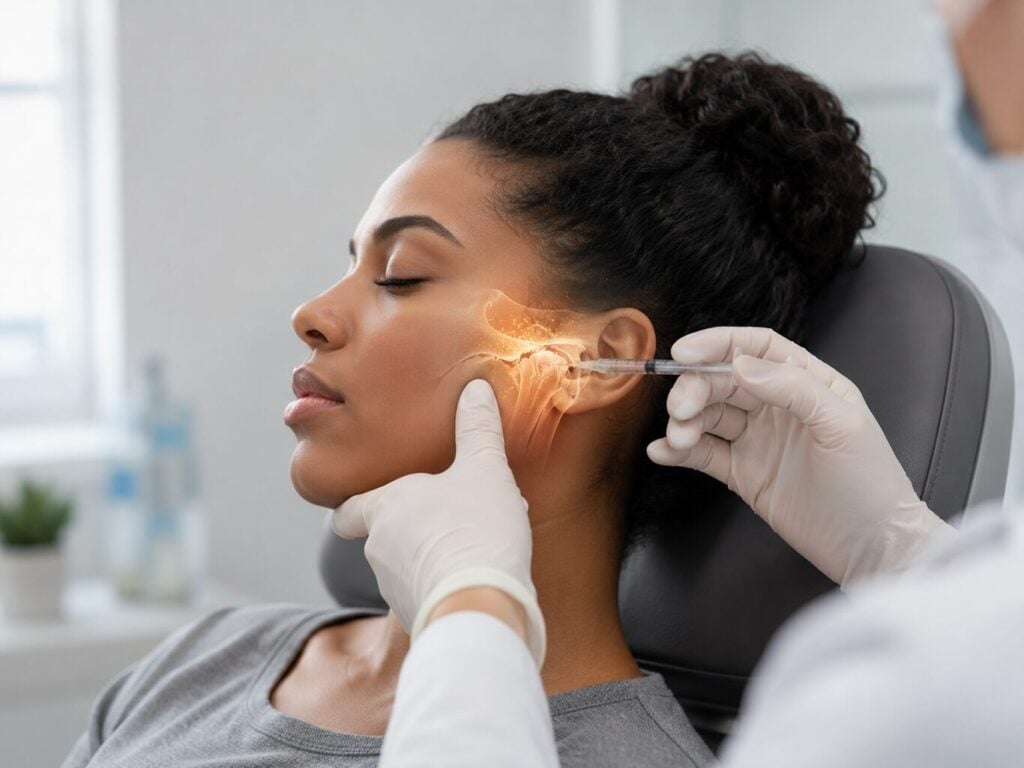
A woman sits with eyes closed as a medical professional injects her jaw area, with a digital illustration highlighting jaw muscles.
― Candidacy

Who prolotherapy helps most.

Prolotherapy for the TMJ is particularly helpful for patients with:
01

Loose or Weakened Ligaments

When the ligaments that hold the jaw joint in place become stretched or weakened, the TMJ can shift, click, or dislocate. Prolotherapy strengthens these ligaments.
02

Recurrent Jaw Dislocations

If your jaw repeatedly slips out of place during normal activities like eating or yawning, prolotherapy can reduce how often dislocations happen by stabilizing the joint.
03

EDS and Hypermobility

Patients with Ehlers-Danlos Syndrome have genetically weaker connective tissue. Prolotherapy can help build stronger support around the TMJ in these patients.
04

Pain After TMJ Surgery

Some patients who had TMJ surgery still hurt because the underlying ligament weakness was never addressed. Prolotherapy can help strengthen the tissue that surgery left weakened.
05

Pain from Ligament Injury

Injuries from car accidents, falls, or sports impacts can stretch or tear the TMJ ligaments, leading to ongoing pain and instability.
Note

Not Sure If It Fits?

An evaluation can tell whether ligament weakness is part of your problem.
― The Process

What to expect, step by step.

Prolotherapy is done in a series. Each session is short, and your body does the healing in between.
01

Evaluation

Your doctor examines the TMJ and checks whether ligament weakness or instability is driving your symptoms. Imaging may be used to assess the joint.
02

Injection

The dextrose solution is injected into specific points around the TMJ ligaments and tendons. The procedure is done in-office and takes about 15 to 30 minutes.
03

Healing Period

After each session, your body builds stronger connective tissue. Sessions are typically spaced three to five weeks apart to allow time to heal.
04

Series of Treatments

Most patients need four to six sessions, though the number depends on severity, overall health, and how your body responds. Many notice improvement after the first or second session.
― The Evidence

What the research shows.

Clinical studies support the use of prolotherapy for TMJ disorders, especially for reducing jaw dislocations and improving stability.
01
Reduced jaw dislocations
Studies report that a large majority of patients treated with prolotherapy did not experience jaw dislocations within six months after completing treatment (one study: 91%).
02
Few sessions needed
Research has found that most patients reached their results within just one to three injection sessions (reported distribution: 63% needed three, 27% two, 10% one).
03
Generally well tolerated
In published studies, prolotherapy injections were generally well tolerated, with complications being uncommon.
04
Added benefits
Beyond fewer dislocations, patients in studies also reported improved range of motion, less use of pain medications, better mood, and improved quality of life.
Outcomes vary by patient. The severity of the ligament damage, your overall health, and your body’s healing response all affect results. Your doctor will discuss realistic expectations for your situation.
― Comparison

Prolotherapy vs. surgery.

Many patients with chronic TMJ pain assume surgery is the only option. It is one option, and it is the right choice for some patients, but it carries real trade-offs. Here is a practical comparison so you can talk it through with your doctor.

TMJ Surgery
Prolotherapy

Whether surgery, prolotherapy, or another approach is right for you depends on your specific joint and your goals. A specialist evaluation is the best way to decide

― Safety

Risks and side effects.

Prolotherapy is considered a safe, well-tolerated treatment. The most common side effects include:
Serious side effects are very uncommon
Because the dextrose solution is a simple sugar-based compound, allergic reactions are extremely rare. The treatment does not involve any medications with systemic side effects.
― Better Together

Often paired with other regenerative care.

For patients with significant joint damage or instability, prolotherapy is sometimes combined with other regenerative treatments.

PRP Therapy

Prolotherapy stimulates connective tissue growth, while PRP adds concentrated growth factors that promote healing. Together, they can do more for damaged or unstable joints.

Exosome & Regenerative Therapy

Other regenerative options may be considered as part of a complete plan for stubborn joint damage.
― FAQ

Common questions about PRP for TMJ.

Practical answers from our board-certified specialists. These questions come directly from patients we see at the clinic.

Does prolotherapy hurt?

You may feel mild discomfort during the injection and some soreness in the jaw area for a few days afterward. Most patients describe the discomfort as very manageable. Your doctor can use local anesthetic to minimize any pain during the procedure.

How many prolotherapy sessions will I need?

Most patients need four to six sessions spaced three to five weeks apart. Some patients see results with fewer sessions. The total number depends on the severity of your condition, your body's healing ability, and your overall health. Your doctor will adjust the treatment plan based on your progress.

Can prolotherapy help if I have Ehlers-Danlos Syndrome?

Yes. Prolotherapy is especially well-suited for EDS patients because it directly addresses the ligament weakness that causes TMJ instability. By promoting the growth of stronger connective tissue, prolotherapy can reduce jaw dislocations and improve joint stability in patients with hypermobile connective tissue.

Is prolotherapy the same as a cortisone shot?

No. Cortisone shots reduce inflammation temporarily but do not repair tissue. With repeated use, cortisone can actually weaken ligaments and cartilage. Prolotherapy takes the opposite approach. It triggers your body to build stronger connective tissue, addressing the structural cause of the problem rather than just the symptoms.

Can prolotherapy be combined with PRP?

Yes. PRP and prolotherapy work well together. Prolotherapy stimulates connective tissue growth while PRP provides concentrated growth factors that promote healing. Your doctor may recommend combining these treatments for patients with significant joint damage or instability.

Dr. Eric Grin
Medically Reviewed By

Board-Certified Orofacial Pain Specialist · Diplomate, American Board of Orofacial Pain · Assistant Professor, UCLA

Last Updated: April 24, 2026
― Schedule Your Consultation

Ready to Find Relief?

Schedule your evaluation with our board-certified orofacial pain specialists and start your path to lasting recovery.

We accept Medicare and most major insurance plans.