
― TMJ & Orofacial Pain

When the headache starts in the jaw.

Board-Certified Specialists · Torrance, California · 32+ Years of Experience

Many chronic headaches and migraines are caused or made worse by a TMJ problem. Identifying that connection is often the missing step between years of failed treatments and lasting relief.

Affected Adults
~9 in 10
Migraine Link
Trigeminal nerve
Evaluation
45–60 min
PRP therapy TMJ Headaches page showing a woman holding her temples with migraine pain
The connection, briefly

Many chronic headaches and migraines are caused or made worse by problems with the jaw. When the temporomandibular joint (TMJ) or the surrounding muscles are not working properly, the pain often spreads to the head, temples, and behind the eyes. Identifying that connection is the key to finding lasting orofacial pain relief.


At South Bay TMJ, Sleep, Headache & Orofacial Pain Institute, our specialists are trained to find headache causes that other providers may miss, including the jaw, muscle, and nerve problems that quietly drive head pain.
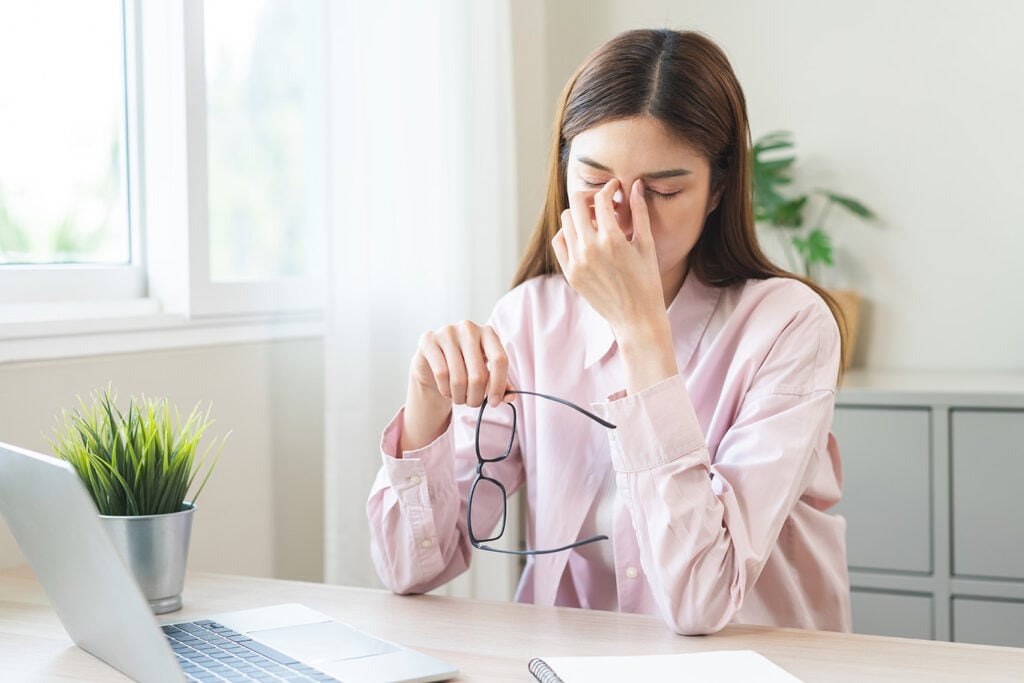
Woman sitting at a desk with a laptop, holding her glasses and pinching the bridge of her nose, appearing tired or stressed.
― The Mechanism

How a jaw problem becomes a headache.

The jaw muscles are among the strongest in your body. When these muscles become tense, overworked, or inflamed, the pain does not stay in the jaw. It travels.

The reason has a name: referred pain. The trigeminal nerve is the main nerve responsible for sensation in the face. It also plays a central role in many types of headaches. Its branches connect the jaw joints, jaw muscles, temples, forehead, and the area around the eyes. When the TMJ or jaw muscles send pain signals through the trigeminal nerve, the result feels like a headache, even though the source is the jaw.

Common jaw-related headache triggers

01

Teeth grinding or clenching (bruxism), which overworks the jaw muscles around the clock

02

A displaced disc inside the TMJ that creates inflammation and joint irritation

03

Tight muscles in the jaw, face, and neck (myofascial pain with trigger points)

04
Bite misalignment that forces the jaw muscles to compensate during chewing, speaking, and rest
05
Stress, which causes many people to clench the jaw involuntarily, often during sleep
― Headache Classification

Types of headaches we evaluate.

The International Headache Society classifies headaches into several categories. Knowing which type you have matters, because the right treatment depends on it.
Type 01

Tension-Type Headaches

Affects roughly 9 in 10 adults at some point

A dull, pressing pain that wraps around the head like a band. Usually mild to moderate. Often triggered by tight muscles in the jaw, neck, and shoulders. When TMJ problems are the underlying cause, treating the jaw issue can reduce or eliminate these headaches entirely.
Type 02

Migraines

About 18% of women, 6% of men

Moderate to severe throbbing pain, usually on one side of the head. Often paired with nausea, vomiting, and sensitivity to light or sound. Episodes can last from four hours to three days. Research shows TMJ disorders can trigger migraines in some patients, and treating the TMJ problem can reduce both frequency and severity.
Type 03

Cluster Headaches

Rare; mostly affects men in their late 20s

Intense, sharp pain around or behind one eye. Cluster headaches occur in groups, sometimes several times a day for weeks or months. They are not typically caused by TMJ problems, but a proper evaluation rules out jaw-related causes and points you toward the right specialist.
Type 04

Cranial Nerve Headaches

Includes trigeminal and occipital neuralgia

Headaches caused by irritation of the cranial nerves running through the face and head. These include sudden jolts of severe facial pain (trigeminal neuralgia) and shooting pain from the back of the head toward the forehead (occipital neuralgia). They require specialized nerve testing.
― Side By Side

How TMJ headaches compare.

If you have been told you have “tension headaches” or “migraines” but treatment has not worked, the pattern of your symptoms can hint at a jaw origin.

TMJ-Related Headache
Tension-Type Headache
Migraine
Pain location
Temples, behind eyes, along the jaw and ear

Band around the entire head

Usually one side; can shift sides

Pain quality

Dull ache with deep pressure; worse with chewing

Steady pressure; mild to moderate

Throbbing; moderate to severe

Common timing

Worst in the morning (nighttime clenching)

Builds during the day; tied to stress

Episodic; can last 4 hours to 3 days

Other symptoms

Jaw clicking, soreness, limited opening

Tight neck and shoulder muscles

Nausea, light/sound sensitivity, aura

What makes it worse
Chewing, talking, yawning, stress
Stress, poor posture, fatigue
Triggers vary by person (foods, hormones, sleep)
Treatment focus
Address the jaw, muscle, and nerve source
Muscle relaxation; stress management
Acute relief plus preventive medication
― Side By Side

How TMJ headaches compare.

If you have been told you have “tension headaches” or “migraines” but treatment has not worked, the pattern of your symptoms can hint at a jaw origin.

TMJ-Related Headache

Pain location: Temples, behind eyes, along the jaw and ear

Pain quality: Dull ache with deep pressure; worse with chewing

Common timing: Worst in the morning (nighttime clenching)

Other symptoms: Jaw clicking, soreness, limited opening

What makes it worse: Chewing, talking, yawning, stress

Treatment focus: Address the jaw, muscle, and nerve source

Tension-Type Headache

Pain location: Band around the entire head

Pain quality: Steady pressure; mild to moderate

Common timing: Builds during the day; tied to stress

Other symptoms: Tight neck and shoulder muscles

What makes it worse: Stress, poor posture, fatigue

Treatment focus: Muscle relaxation; stress management

Migraine

Pain location: Usually one side; can shift sides

Pain quality: Throbbing; moderate to severe

Common timing: Episodic; can last 4 hours to 3 days

Other symptoms: Nausea, light/sound sensitivity, aura

What makes it worse: Triggers vary by person (foods, hormones, sleep)

Treatment focus: Acute relief plus preventive medication

― Self-Check

Could your headaches be coming from your jaw?

Not all headaches come from TMJ problems, but many do. If several of these patterns sound familiar, the jaw is worth investigating.
If you recognize several of these patterns, an evaluation by an orofacial pain specialist can determine whether your jaw is the source. See what a first visit looks like →
― Our Approach

How we diagnose headache disorders.

Many patients who come to us have lived with headaches for years without finding the real cause. A proper evaluation that looks at the jaw, muscles, and nerves often reveals connections that earlier providers missed.

A complete review of your headache history: when symptoms started, how often they occur, where the pain sits, and what makes it better or worse

A thorough exam of your jaw joints, jaw muscles, face, head, and neck

Testing the muscles for trigger points that may be referring pain to your head
Evaluating your bite alignment and jaw mechanics
Neurological screening to rule out other causes
Imaging (CT or MRI) when needed to assess the TMJ or rule out other conditions
A man sitting on a couch with his glasses on his head, holding the bridge of his nose and appearing stressed or fatigued in a bright living room.
― Treatment

What treatment looks like.

When headaches are caused or worsened by TMJ problems, treating the jaw is the path to long-term relief. We favor conservative approaches first, escalating only when needed.

Custom Oral Appliances

Reduce clenching and grinding, relax the jaw muscles, and take pressure off the TMJ. For many patients, this alone significantly reduces headache frequency.

Botox Injections

Relax overactive jaw and temple muscles that trigger tension headaches and migraines. Effects typically last 3 to 4 months.

Trigger Point Injections

Release tight, painful spots in the jaw and neck muscles that refer pain to the head. Often done in a single office visit.

Nerve Blocks

Targeted injections that block pain signals from nerves contributing to the headache. Used for diagnostic clarification and symptom relief.

Physical Therapy

Strengthening and stretching for the jaw and neck. Posture work to reduce muscle strain through the day. We coordinate with trusted local therapists.

Medication Management

Anti-inflammatories, muscle relaxants, or preventive medications when appropriate. Used alongside, not instead of, addressing the underlying cause.

Our approach focuses on finding and treating the underlying cause rather than just managing symptoms. Most patients notice a meaningful reduction in headache frequency and severity within the first few weeks of treatment.

― Questions, Answered

What patients ask most.

Practical answers from our board-certified specialists. These questions come directly from patients we see at the clinic.

TMJ disorders can trigger migraines in some patients. The trigeminal nerve, which is involved in migraines, also connects to the jaw joints and jaw muscles. When TMJ problems irritate this nerve, it can set off a migraine. Treating the TMJ disorder has been shown to reduce both frequency and severity for many patients.

Morning headaches are a common sign of nighttime teeth grinding (sleep bruxism). When you grind or clench during sleep, the jaw muscles are strained for hours. The result is often a headache that is most noticeable the moment you wake up. A custom oral appliance worn at night can help prevent this.

Signs that your headache may be jaw-related include temple pain, jaw soreness or clicking, pain that gets worse with chewing, and headaches that have not responded to typical treatments. If you have both headaches and jaw symptoms, an orofacial pain specialist can evaluate whether they are connected.

Yes. When the upper and lower teeth do not fit together correctly, the jaw muscles have to work harder to find a comfortable position. That extra strain can lead to muscle fatigue, tension, and headaches. Correcting the bite alignment with an oral appliance or other treatment can relieve the muscle strain and reduce headaches.

The goal of treatment is long-term relief. Many patients see lasting improvement after their TMJ condition is properly treated. Some patients may need ongoing use of an oral appliance at night to prevent a return of symptoms. Your doctor will create a plan to maintain results over time.

Dr. Eric Grin
Medically Reviewed By

Board-Certified Orofacial Pain Specialist · Diplomate, American Board of Orofacial Pain · Assistant Professor, UCLA

Last Updated: April 24, 2026
― Schedule Your Consultation

Ready to Find Relief?

Schedule your evaluation with our board-certified orofacial pain specialists.

We accept Medicare and most major insurance plans.